There are billions of stars, millions of planets, but there is only one man, Terrance McDoogal. Welcome to LIU Atlas.
LIU Atlas - Birefringens
The Ludgonian Industrial Union's galaxy contains billions of stars and billions of planets. Unfortunately, most residents of the LIU could only name a handful of these worlds. In order to improve astronomy grades across the LIU, TV2 has started a new program called LIU Atlas. Follow our host, Terrance McDoogal, as he takes you on a tour across the LIU and some of its more obscure worlds.
Note: This episode is presented in full screen. The corresponding dialogue is underneath each photo.
Note: This episode is presented in full screen. The corresponding dialogue is underneath each photo.
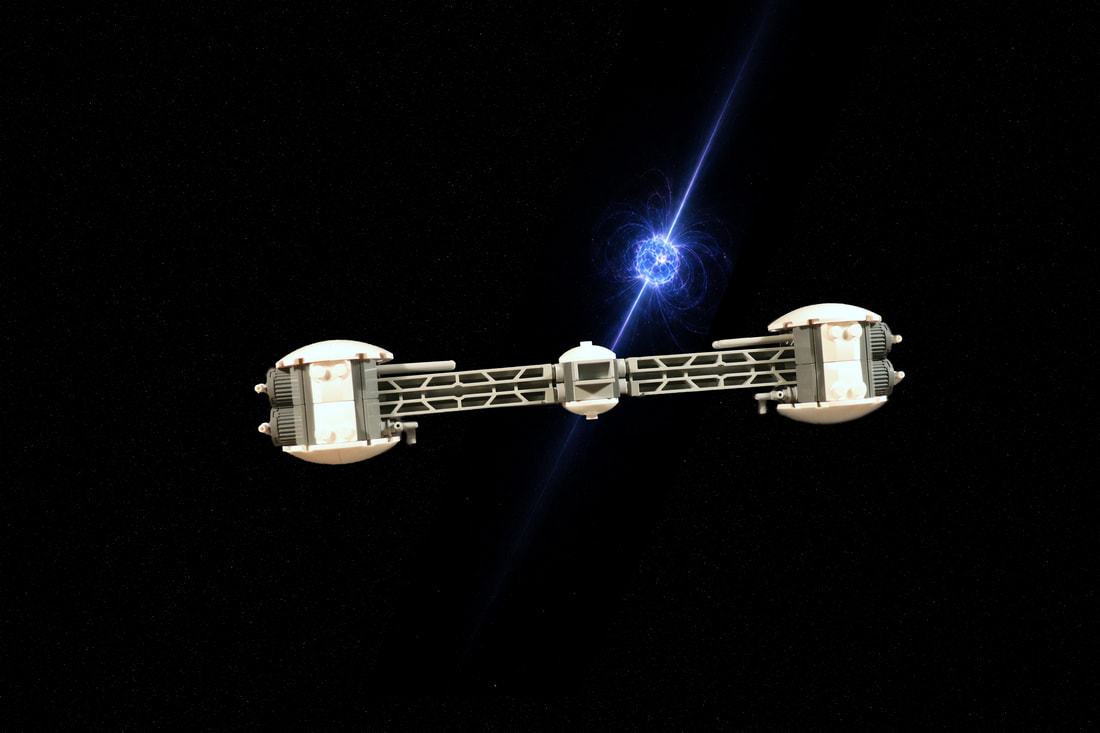
Doog: “Welcome to another episode of LIU Atlas. I’m your host, Terrance “Doog” McDoogal. Today, we are visiting the star Birefringens. Birefringens is a powerful magnetar that somehow helps with galactic navigation. Don’t ask me specifics. I’m told it has something to do with the star’s unusual characteristics. Because Birefringens has no planets, station J44-Q7 was built in its orbit so the magnetar could be studied and monitored. That’s our destination.”
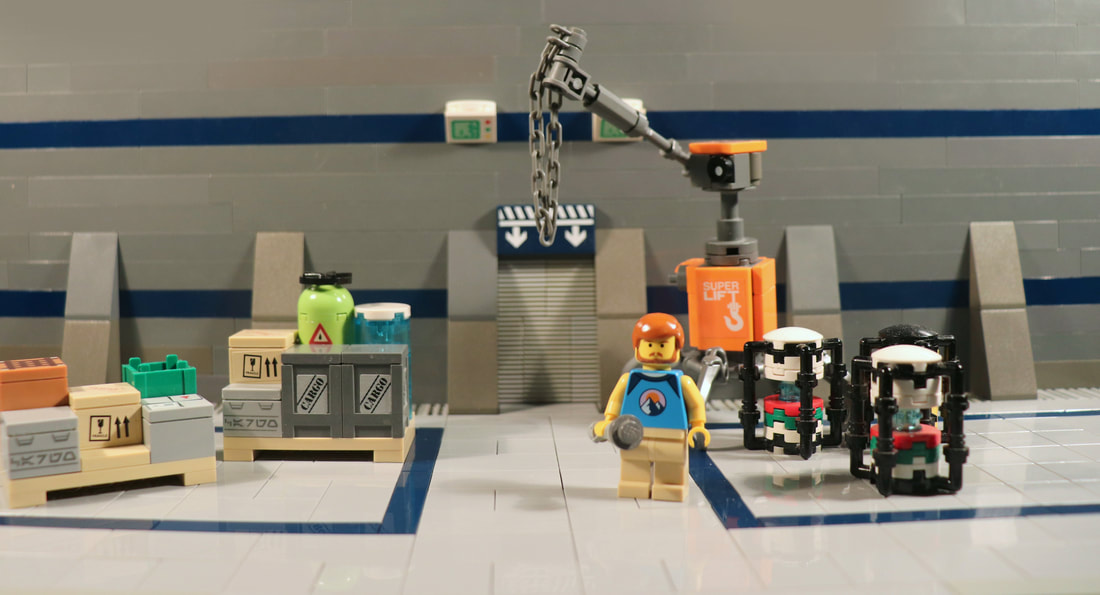
Doog: “Alright folks, I’ve been dropped off in J44-Q7’s hangar bay. There’s lots of cargo sitting around, but it is notably absent of any people. There is this Robo-Loader, but he’s not been very helpful.”
RL: “Subject lacks appropriate freight manifests; therefore, it is not of my concern.”
Doog: “Nice to meet you too, robot.”
RL: “Subject lacks appropriate freight manifests; therefore, it is not of my concern.”
Doog: “Nice to meet you too, robot.”
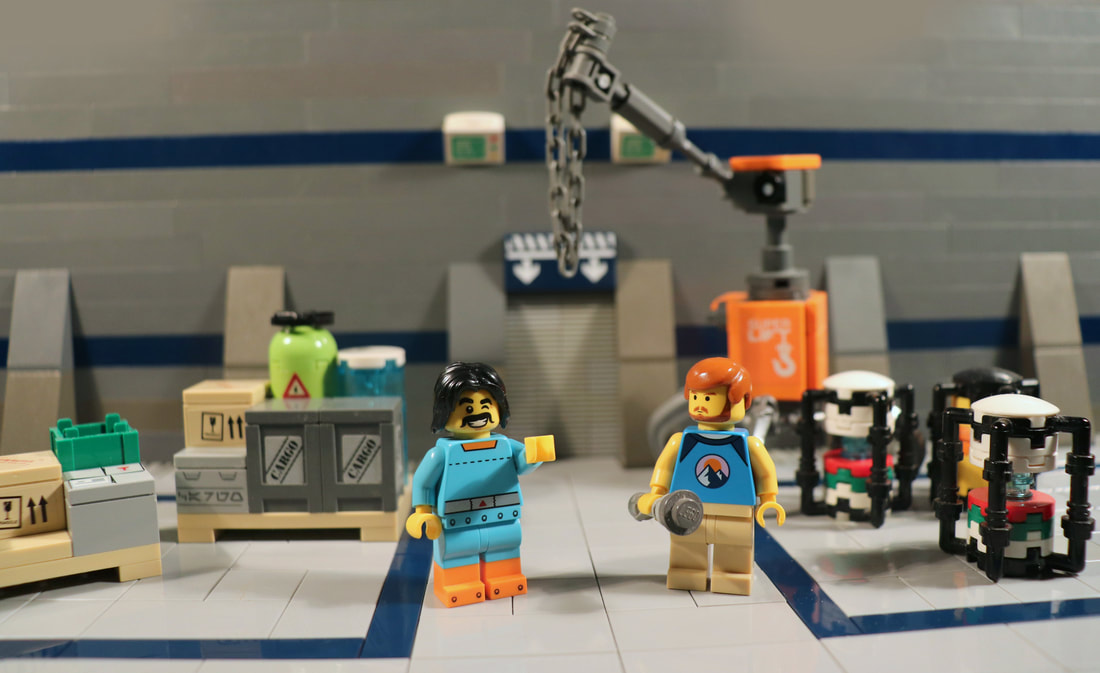
Venn: “You must be Doog.”
Doog: “I’d like to think you recognized me because I’m famous, but it’s definitely because I’m the only other person in this giant hangar, right?”
Venn: “Yeah, the latter.”
Doog: “Figured.”
Venn: “I’m Venn Marek, by the way.”
Doog: “Nice to meet you Venn. So, what do you do here?”
Venn: “Are you familiar with Star-Lock?”
Doog: “It’s a prison, right?”
Venn: “No. It’s a galactic navigational system.”
Doog: “Then, no.”
Venn: “Essentially, it’s a navigation system that utilizes specially selected astronomical reference points within the galaxy. Each of these reference points has an accurately known location and a recognizable, predictable signature. Your ship can scan for these reference points to determine your current location and orientation within the galaxy.”
Doog: “Is that the fancy way of saying this station handles Space GPS?”
Venn: “In the broadest possible sense, yes.”
Doog: “Got it.”
Venn: “Birefringens is known as Nav 2. It was the second reference point added to Star-Lock.”
Doog: “What was the first?”
Venn: “Sidere Artifex.”
Doog: “Hey! I was there way back in Season 7. That’s the galaxy’s brightest star.”
Venn: “Yes, Nav 1’s recognizable and predictable signature is its exceptional and remarkably stable luminosity.”
Doog: “What’s Birefringens’?”
Venn: “Its pulses. Birefringens emits extremely regular bursts of radiation, each with a distinctive polarization signature. Together, they make it almost impossible to mistake for anything else.”
Doog: “Polarization signature?”
Venn: “Birefringens has an extraordinarily powerful magnetic field. It affects the polarization of light passing through the space around it – a phenomenon called vacuum birefringence.”
Doog: “That cleared up nothing.”
Venn: “I don’t get it either. I’m just an operator.”
Doog: “I’d like to think you recognized me because I’m famous, but it’s definitely because I’m the only other person in this giant hangar, right?”
Venn: “Yeah, the latter.”
Doog: “Figured.”
Venn: “I’m Venn Marek, by the way.”
Doog: “Nice to meet you Venn. So, what do you do here?”
Venn: “Are you familiar with Star-Lock?”
Doog: “It’s a prison, right?”
Venn: “No. It’s a galactic navigational system.”
Doog: “Then, no.”
Venn: “Essentially, it’s a navigation system that utilizes specially selected astronomical reference points within the galaxy. Each of these reference points has an accurately known location and a recognizable, predictable signature. Your ship can scan for these reference points to determine your current location and orientation within the galaxy.”
Doog: “Is that the fancy way of saying this station handles Space GPS?”
Venn: “In the broadest possible sense, yes.”
Doog: “Got it.”
Venn: “Birefringens is known as Nav 2. It was the second reference point added to Star-Lock.”
Doog: “What was the first?”
Venn: “Sidere Artifex.”
Doog: “Hey! I was there way back in Season 7. That’s the galaxy’s brightest star.”
Venn: “Yes, Nav 1’s recognizable and predictable signature is its exceptional and remarkably stable luminosity.”
Doog: “What’s Birefringens’?”
Venn: “Its pulses. Birefringens emits extremely regular bursts of radiation, each with a distinctive polarization signature. Together, they make it almost impossible to mistake for anything else.”
Doog: “Polarization signature?”
Venn: “Birefringens has an extraordinarily powerful magnetic field. It affects the polarization of light passing through the space around it – a phenomenon called vacuum birefringence.”
Doog: “That cleared up nothing.”
Venn: “I don’t get it either. I’m just an operator.”
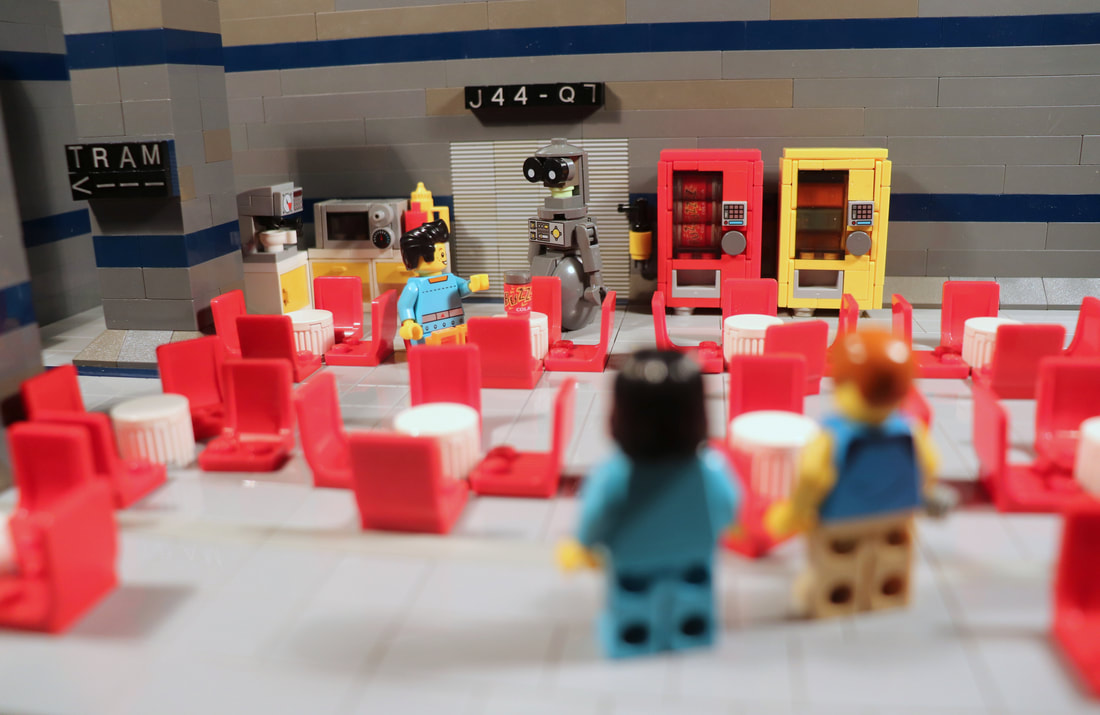
Venn: “This part of the station is called Centerpoint. It’s in between Spheres A and B. Centerpoint contains all the station’s logistical areas: dorms, cafeterias, cargo hangars, power generation, etc.”
Doog: “The only thing more confusing than vacuum bi-refrigerants, or whatever, is how empty the station is. There’s only one guy in this huge room.”
Venn: “Yeah, they’ve thinned us out over the years. Automation and stuff.”
Doog: “How many are left?”
Venn: “Eight.”
Doog: “Hundred?”
Venn: “No, just eight.”
Doog: “Eight?! This station has to be almost a kilometer long!”
Venn: “Two, actually. The detector arrays have to be isolated from each other to prevent signal contamination.”
Doog: “That has to make you lonely.”
Venn: “It does. It’s worse than you think, too. Our shifts, breaks, and days off are all offset to provided ample coverage. You can easily go weeks or months without seeing anyone, other than in passing.”
Doog: “The only thing more confusing than vacuum bi-refrigerants, or whatever, is how empty the station is. There’s only one guy in this huge room.”
Venn: “Yeah, they’ve thinned us out over the years. Automation and stuff.”
Doog: “How many are left?”
Venn: “Eight.”
Doog: “Hundred?”
Venn: “No, just eight.”
Doog: “Eight?! This station has to be almost a kilometer long!”
Venn: “Two, actually. The detector arrays have to be isolated from each other to prevent signal contamination.”
Doog: “That has to make you lonely.”
Venn: “It does. It’s worse than you think, too. Our shifts, breaks, and days off are all offset to provided ample coverage. You can easily go weeks or months without seeing anyone, other than in passing.”
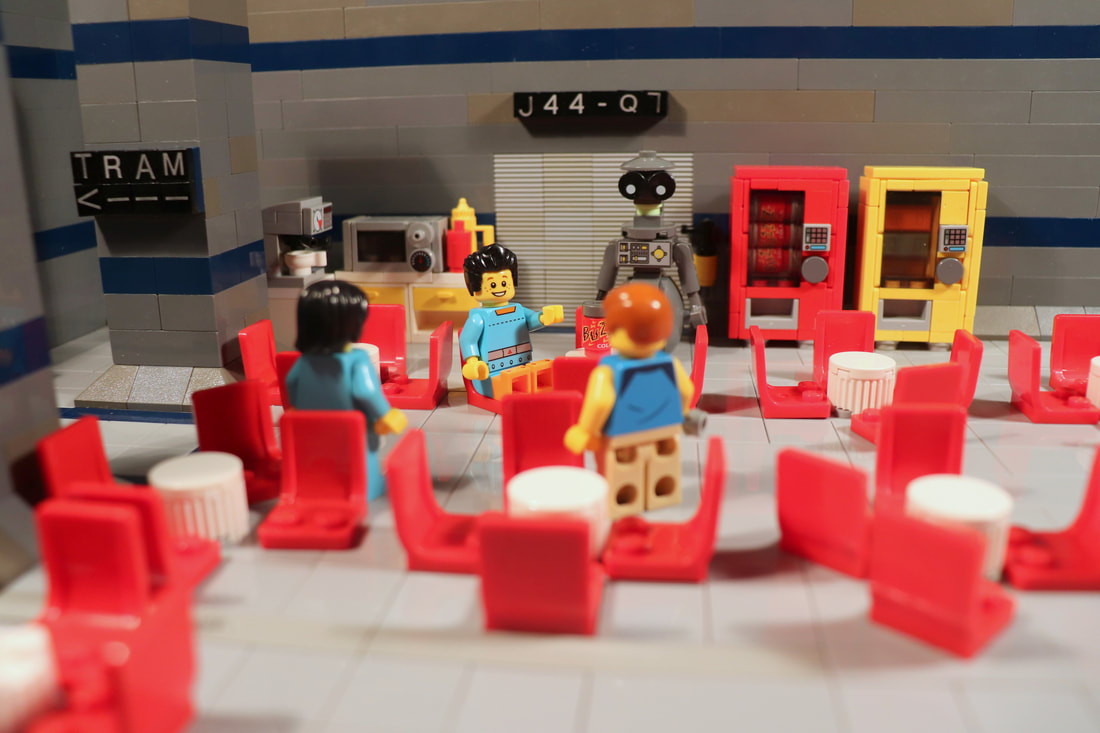
Todd: “Venn? I didn't know your schedule changed! I didn't think our schedules synced again for months! Want to play cards or dominoes or something? Literally anything would be better than chatting with #55268.”
Venn: “Sorry, Todd. I’m taking this guy for a tour of Sphere A. After that, it’s right back to the grind for me.”
Todd: “Darn. Is there a sign-up sheet or something? I want to show people around the station and talk to them and socialize with them and…”
Venn: “I think it’s a onetime gig, bud.”
Todd: “Of course it is.”
Venn: “Don’t worry, I’m sure you sync with someone soon enough. Come on, Doog. Tram’s this way.”
Venn: “Sorry, Todd. I’m taking this guy for a tour of Sphere A. After that, it’s right back to the grind for me.”
Todd: “Darn. Is there a sign-up sheet or something? I want to show people around the station and talk to them and socialize with them and…”
Venn: “I think it’s a onetime gig, bud.”
Todd: “Of course it is.”
Venn: “Don’t worry, I’m sure you sync with someone soon enough. Come on, Doog. Tram’s this way.”
Todd: “So, #55268, where were we?”
55268: “Literally anything, huh?”
Todd: “Uh…did I say that? If I did, I misspoke. Don’t take it the wrong way. I love it when you dictate operation manuals to me.”
55268: “Entering mute mode.”
Todd: “No!”
55268: “Literally anything, huh?”
Todd: “Uh…did I say that? If I did, I misspoke. Don’t take it the wrong way. I love it when you dictate operation manuals to me.”
55268: “Entering mute mode.”
Todd: “No!”
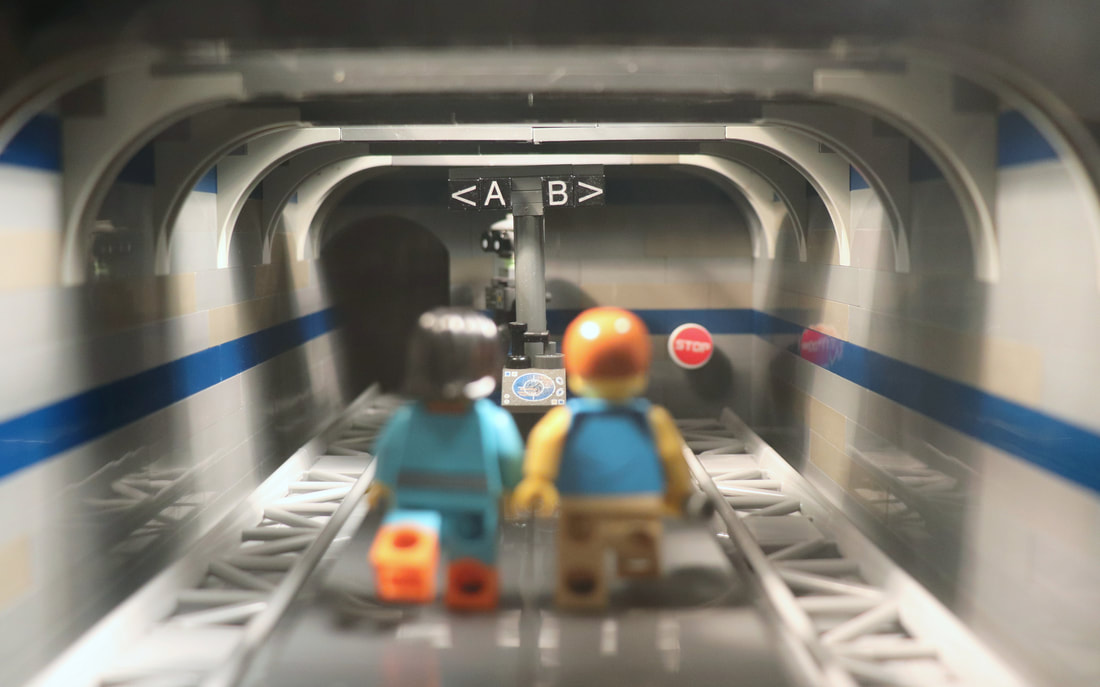
Doog: “After thinking about it, there’s another thing I don’t get. I visited the Omni-Star AI way back in Season 2. I thought it was responsible for calculating where every star, planet, and moon is located at any given time. Doesn’t that defeat the purpose of Star-Lock?”
Venn: “The Omni-Star was designed primarily for faster-than-light communications, not travel. That said, its vast knowledge of locations is still important to Star-Lock.”
Doog: “How so?”
Venn: “Think of it this way. Omni-Star tells your ship where your destination is. Star-Lock tells your ship where it is. Both pieces of information allow your ship’s computer to plot an accurate course.”
Doog: “I think I’m starting to understand a little…except how Star-Lock knows your exact location.”
Venn: “Star-Lock is a sensor system aboard your ship. It scans for distinctive, easily identified astronomical objects throughout the galaxy. We call them Nav Points. There are twenty-four in total. Birefringens is one. Sidere Artifex is another. By measuring the positions of several Nav Points relative to your ship, Star-Lock can calculate your location and orientation.”
Doog: “What’s the point of this station, then?”
Venn: “We keep Nav 2 accurate. Birefringens is predictable, but it isn't perfectly constant. We continuously monitor its pulses, polarization, magnetic field, and position. Any changes we detect are added to the Star-Lock data.”
Doog: “So you're basically making sure the sensors know exactly what to look for.”
Venn: “And exactly where to look for it.”
Doog: “I see.”
Venn: “Let’s call a tram.”
Venn: “The Omni-Star was designed primarily for faster-than-light communications, not travel. That said, its vast knowledge of locations is still important to Star-Lock.”
Doog: “How so?”
Venn: “Think of it this way. Omni-Star tells your ship where your destination is. Star-Lock tells your ship where it is. Both pieces of information allow your ship’s computer to plot an accurate course.”
Doog: “I think I’m starting to understand a little…except how Star-Lock knows your exact location.”
Venn: “Star-Lock is a sensor system aboard your ship. It scans for distinctive, easily identified astronomical objects throughout the galaxy. We call them Nav Points. There are twenty-four in total. Birefringens is one. Sidere Artifex is another. By measuring the positions of several Nav Points relative to your ship, Star-Lock can calculate your location and orientation.”
Doog: “What’s the point of this station, then?”
Venn: “We keep Nav 2 accurate. Birefringens is predictable, but it isn't perfectly constant. We continuously monitor its pulses, polarization, magnetic field, and position. Any changes we detect are added to the Star-Lock data.”
Doog: “So you're basically making sure the sensors know exactly what to look for.”
Venn: “And exactly where to look for it.”
Doog: “I see.”
Venn: “Let’s call a tram.”
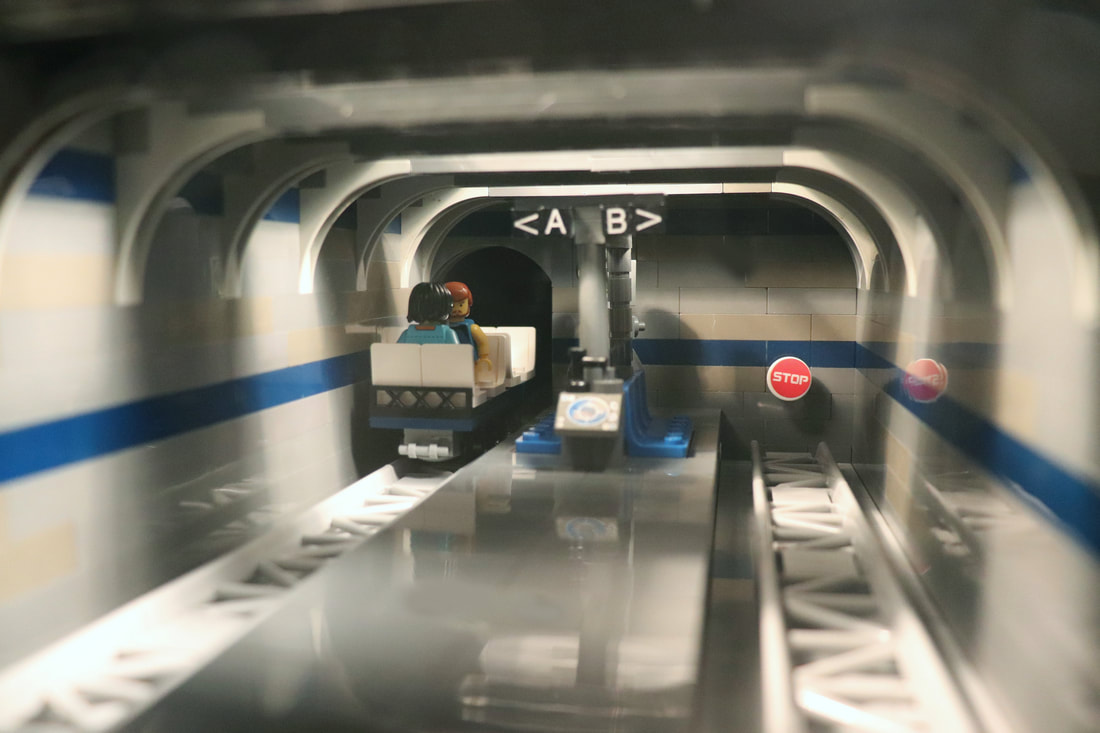
Venn: “It’s a five-minute ride to Sphere A.”
Doog: “I probably should have waited to ask my questions until we were on the tram. Now we have nothing to talk about for the next five minutes. This might be awkward.”
Venn: “It’s even more awkward because we’re staring at each other.”
Doog: “I should have chosen a different seat.”
Venn: “Probably.”
Doog: “I probably should have waited to ask my questions until we were on the tram. Now we have nothing to talk about for the next five minutes. This might be awkward.”
Venn: “It’s even more awkward because we’re staring at each other.”
Doog: “I should have chosen a different seat.”
Venn: “Probably.”
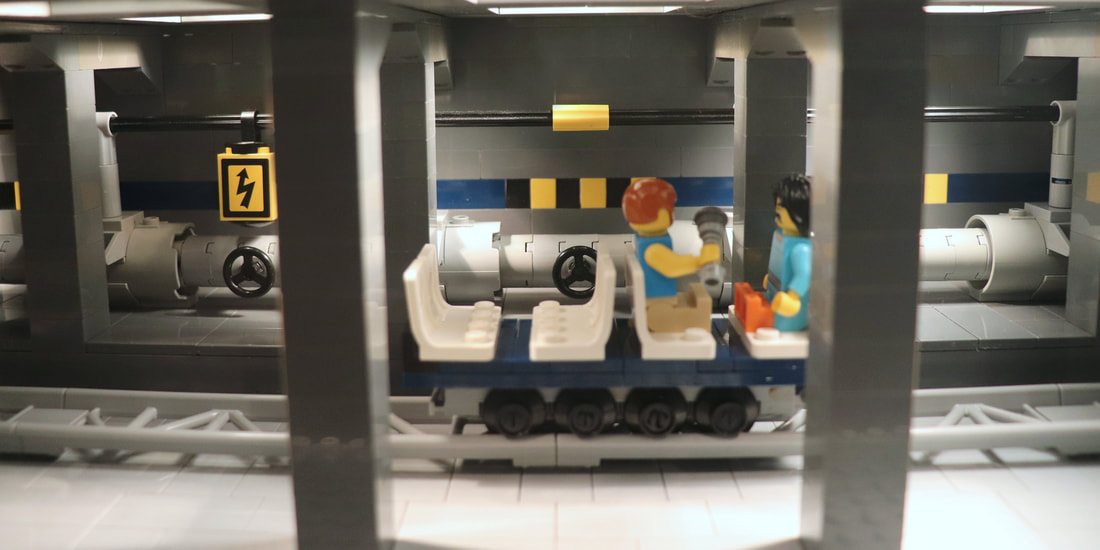
Doog: “What’s all this stuff? Surely you can say a few words about this.”
Venn: “I think it’s just electrical conduits and coolant pipes. Not much to say about it.”
Doog: “Has it been five minutes yet?”
Venn: “Maybe two.”
Venn: “I think it’s just electrical conduits and coolant pipes. Not much to say about it.”
Doog: “Has it been five minutes yet?”
Venn: “Maybe two.”
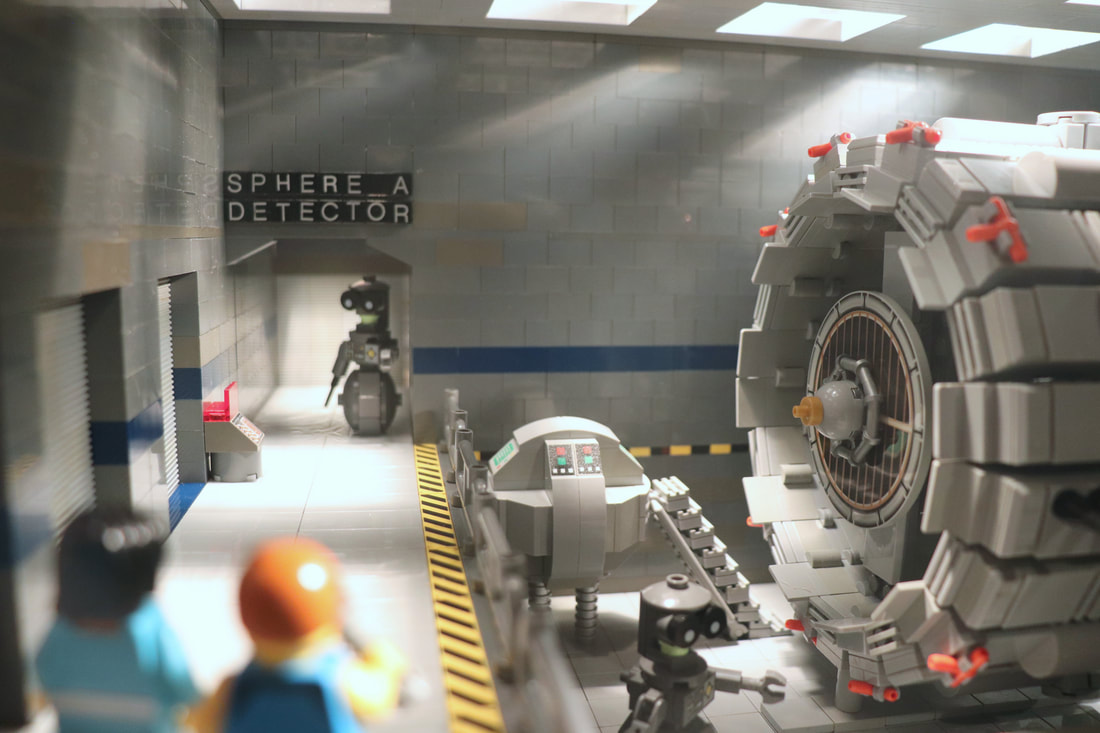
Venn: “Welcome to Sphere A.”
Doog: “It looks remarkably like the section we just left, just with more mechanical things.”
Venn: “Yeah, the designers definitely preferred utility over aesthetics.”
Doog: “What’s all this stuff?”
Venn: “Instruments of various sorts. I think this room has a few detectors.”
Doog: “Detectors?”
Venn: “I really can’t go into much detail. Like I said before, we’re monitoring Birefringens’ pulses, polarization, magnetic field, and position, but I couldn’t tell you which thing does what. I can tell you that there’s a lot of it. Apart from a few monitoring stations, this whole sphere is packed with mechanical instruments.”
Doog: “It looks remarkably like the section we just left, just with more mechanical things.”
Venn: “Yeah, the designers definitely preferred utility over aesthetics.”
Doog: “What’s all this stuff?”
Venn: “Instruments of various sorts. I think this room has a few detectors.”
Doog: “Detectors?”
Venn: “I really can’t go into much detail. Like I said before, we’re monitoring Birefringens’ pulses, polarization, magnetic field, and position, but I couldn’t tell you which thing does what. I can tell you that there’s a lot of it. Apart from a few monitoring stations, this whole sphere is packed with mechanical instruments.”
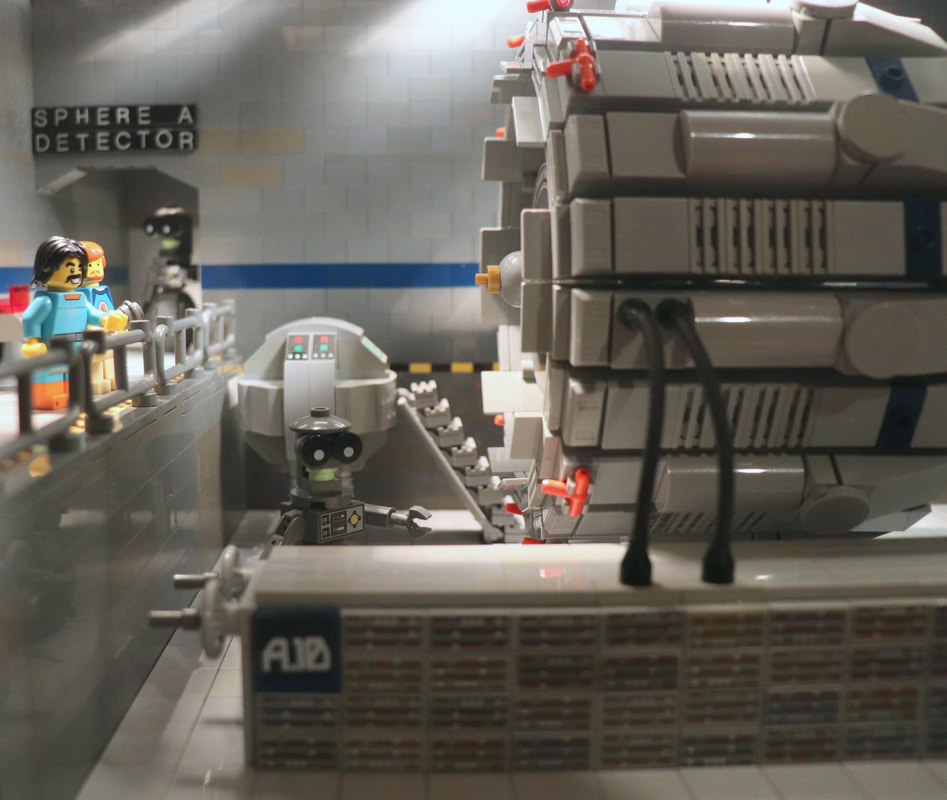
Doog: “You don’t have to work on any of it?”
Venn: “Not a bit. There are hundreds of these repair bots roaming around. They keep everything running.”
Doog: “They replaced a lot of the actual workers, I’m guessing.”
Venn: “Not as many as you might think. The repair bots have been here since J44-Q7 opened. We might have added a few more bots and lost a few mechanics and electricians over time, but not many.”
Doog: “Where did all the workers go then?”
Venn: “Back when the station was being built, all kinds of professions were needed. Scientists to determine what needed monitoring. Designers and engineers to build the instruments. Architects to make everything fit together. Software engineers to automate it all. I could go on and on. Eventually, they got everything set up and working satisfactorily. After that, most of them left.”
Doog: “I see. So, what exactly do you do? What’s the remaining jobs?”
Venn: “Follow me.”
Venn: “Not a bit. There are hundreds of these repair bots roaming around. They keep everything running.”
Doog: “They replaced a lot of the actual workers, I’m guessing.”
Venn: “Not as many as you might think. The repair bots have been here since J44-Q7 opened. We might have added a few more bots and lost a few mechanics and electricians over time, but not many.”
Doog: “Where did all the workers go then?”
Venn: “Back when the station was being built, all kinds of professions were needed. Scientists to determine what needed monitoring. Designers and engineers to build the instruments. Architects to make everything fit together. Software engineers to automate it all. I could go on and on. Eventually, they got everything set up and working satisfactorily. After that, most of them left.”
Doog: “I see. So, what exactly do you do? What’s the remaining jobs?”
Venn: “Follow me.”
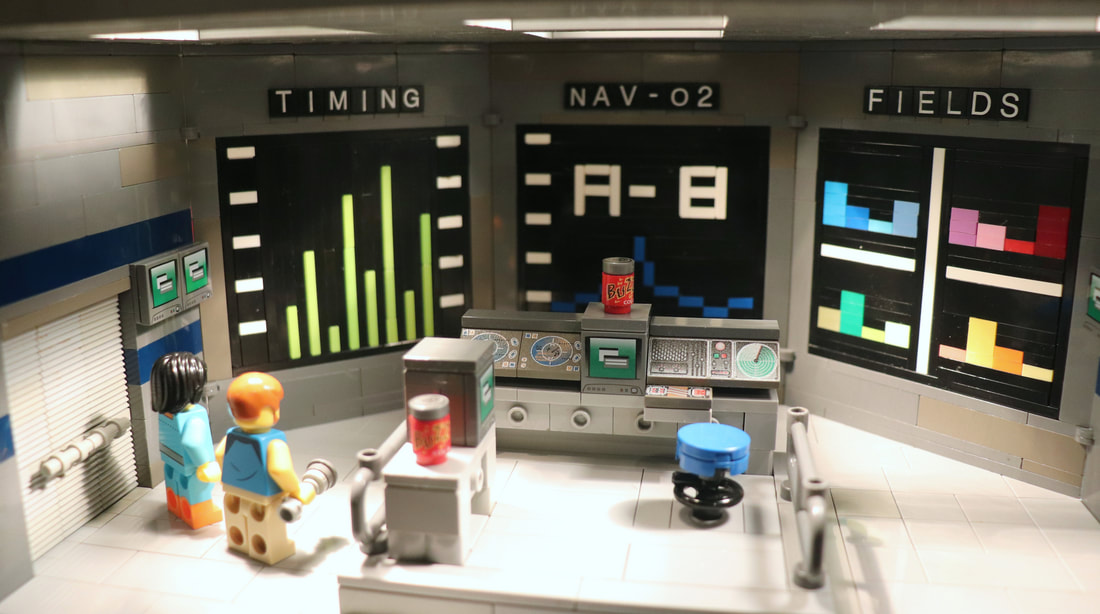
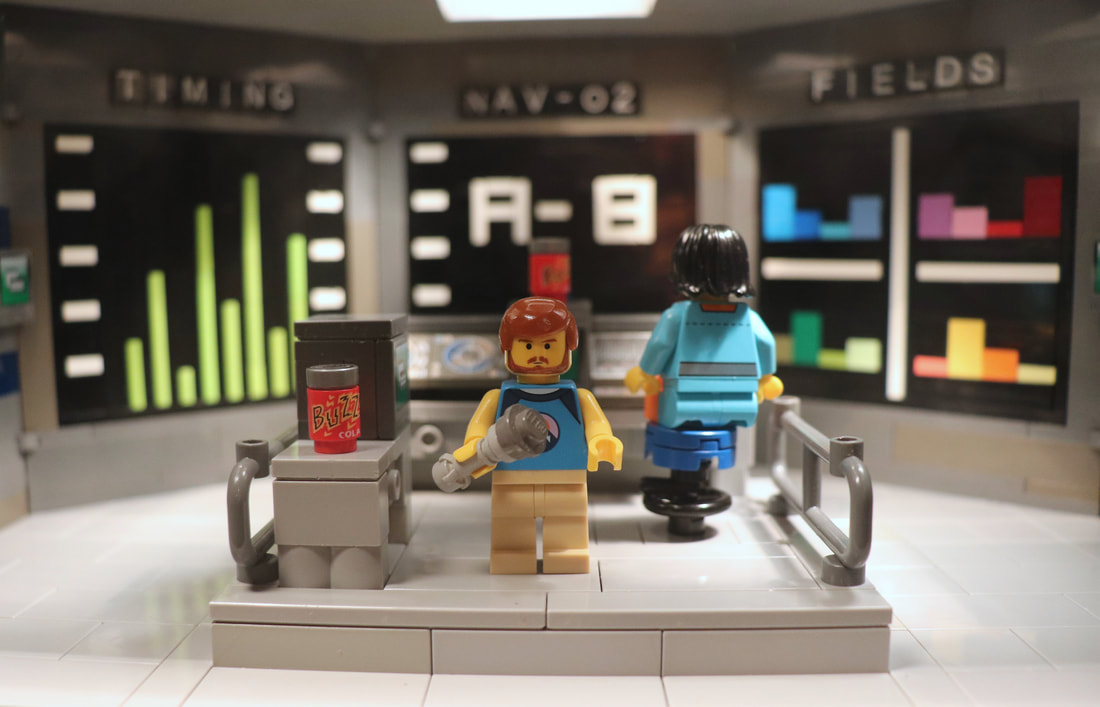
Venn: “Like I mentioned before, the station mostly operates itself. In this room, computerized systems collect the data, analyze it, and update Star-Lock automatically.”
Doog: “You help with that somehow?”
Venn: “No. I sit here and wait for something to go wrong. I’m a failsafe operator.”
Doog: “Do things go wrong often?”
Venn: “Almost never. But it’s an important job nonetheless. If some form of automation failed or an important system crashed, incorrect data could be broadcast to Star-Lock. Ships using that data could calculate their position incorrectly. Worst-case scenario, a ship could plot a bad course and crash.”
Doog: “So what do you do if that happens?”
Venn: “Take the Nav 2 offline until it is functioning properly again.”
Doog: “Star-Lock can still function without one of its Nav Points?”
Venn: “Easily. With twenty-four points, the system is very redundant. One or two could go off for a bit.”
Doog: “You help with that somehow?”
Venn: “No. I sit here and wait for something to go wrong. I’m a failsafe operator.”
Doog: “Do things go wrong often?”
Venn: “Almost never. But it’s an important job nonetheless. If some form of automation failed or an important system crashed, incorrect data could be broadcast to Star-Lock. Ships using that data could calculate their position incorrectly. Worst-case scenario, a ship could plot a bad course and crash.”
Doog: “So what do you do if that happens?”
Venn: “Take the Nav 2 offline until it is functioning properly again.”
Doog: “Star-Lock can still function without one of its Nav Points?”
Venn: “Easily. With twenty-four points, the system is very redundant. One or two could go off for a bit.”
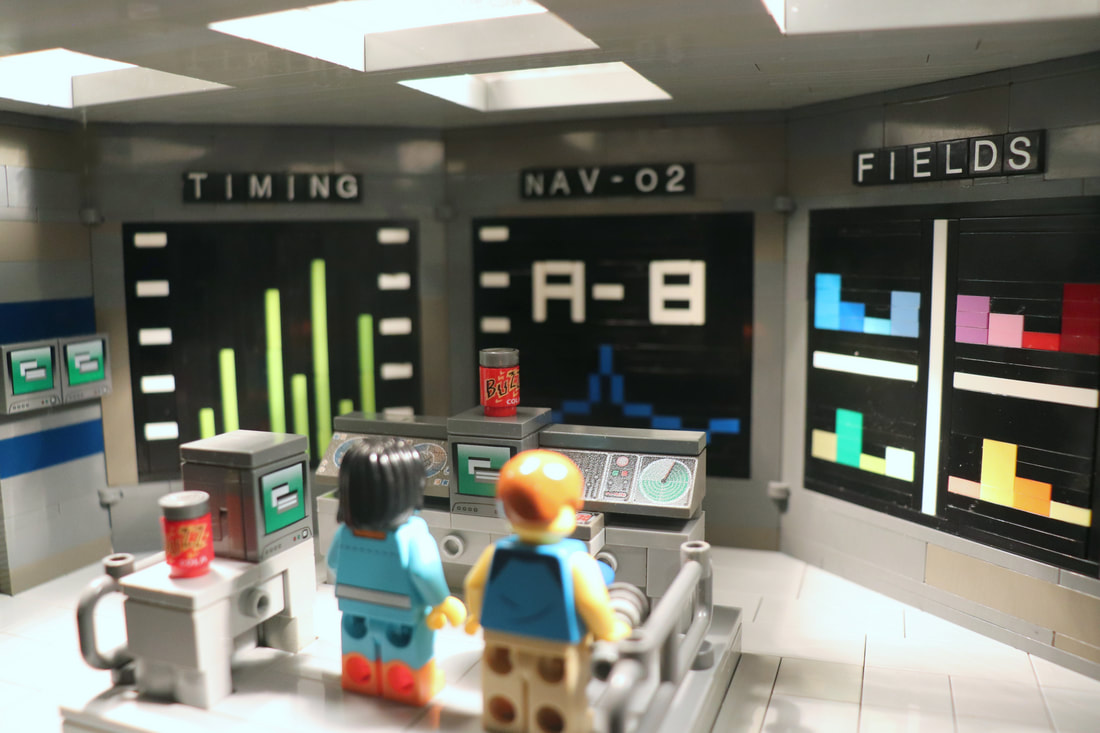
Doog: “How do you know when something went wrong?”
Venn: “The data screens stop looking right. The timing should oscillate. Big spike, little spike, big spike, little spike, and so on. The Nav-02 birefringence spike should also be centered. The fields should never be aligned. Things like that.”
Doog: “How were you monitoring all of this while you were walking around the station with me?”
Venn: “I’m not on duty yet. My counterpart in Sphere B should be monitoring.”
Doog: “Is that what all eight of you do?”
Venn: “No. Only four of us are failsafe operators. Two handle logistics like life-support, power, and communications. And two are bot-techs. They work on and with the hundreds of bots across the station. I almost never see the other failsafe operators as our schedules overlap, but I run into the logistics and techs occasionally.”
Doog: “Anything else to add?”
Venn: “No, and my shift starts soon. I need to get caffeinated before I go and stare at these screens for ten hours.”
Venn: “The data screens stop looking right. The timing should oscillate. Big spike, little spike, big spike, little spike, and so on. The Nav-02 birefringence spike should also be centered. The fields should never be aligned. Things like that.”
Doog: “How were you monitoring all of this while you were walking around the station with me?”
Venn: “I’m not on duty yet. My counterpart in Sphere B should be monitoring.”
Doog: “Is that what all eight of you do?”
Venn: “No. Only four of us are failsafe operators. Two handle logistics like life-support, power, and communications. And two are bot-techs. They work on and with the hundreds of bots across the station. I almost never see the other failsafe operators as our schedules overlap, but I run into the logistics and techs occasionally.”
Doog: “Anything else to add?”
Venn: “No, and my shift starts soon. I need to get caffeinated before I go and stare at these screens for ten hours.”
Doog: “Well folks, that’s Birefringens. This magnetar gives off such an unusual signature that it can be easily identified by a ship’s Star-Lock system, allowing it to serve as one of twenty-four Nav Points. These points help ships determine their location and orientation within the galaxy, which is pretty important if you want to know where you’re going. A dedicated crew of eight workers and hundreds of bots operate the orbiting J44-Q7 station, making sure Birefringens’ data stays accurate and up to date in Star-Lock. I have a new appreciation for both galactic navigation and my annoying coworkers. Seriously, I couldn’t imagine working alone for months at a time. Oh well, see ya.”
Note:
Star-Lock utilizes twenty-four astronomical reference points across the galaxy:
-Nav 1: Sidere Artifex / Detectability: Exceptional and stable luminosity
-Nav 2: Birefringens / Detectability: Regular pulses and distinctive polarization
-Nav 3: Vicis / Detectability: Millisecond pulsar timing signature
-Nav 4: Amici Binary System/ Detectability: Distinctive orbital cycle
To learn all 24 Nav Points, visit the Star-Lock app on your LIUpad.
Note:
Star-Lock utilizes twenty-four astronomical reference points across the galaxy:
-Nav 1: Sidere Artifex / Detectability: Exceptional and stable luminosity
-Nav 2: Birefringens / Detectability: Regular pulses and distinctive polarization
-Nav 3: Vicis / Detectability: Millisecond pulsar timing signature
-Nav 4: Amici Binary System/ Detectability: Distinctive orbital cycle
To learn all 24 Nav Points, visit the Star-Lock app on your LIUpad.
CLICK HERE FOR NEXT EPISODE - Season 18 - Episode 10 - Coming Soon

